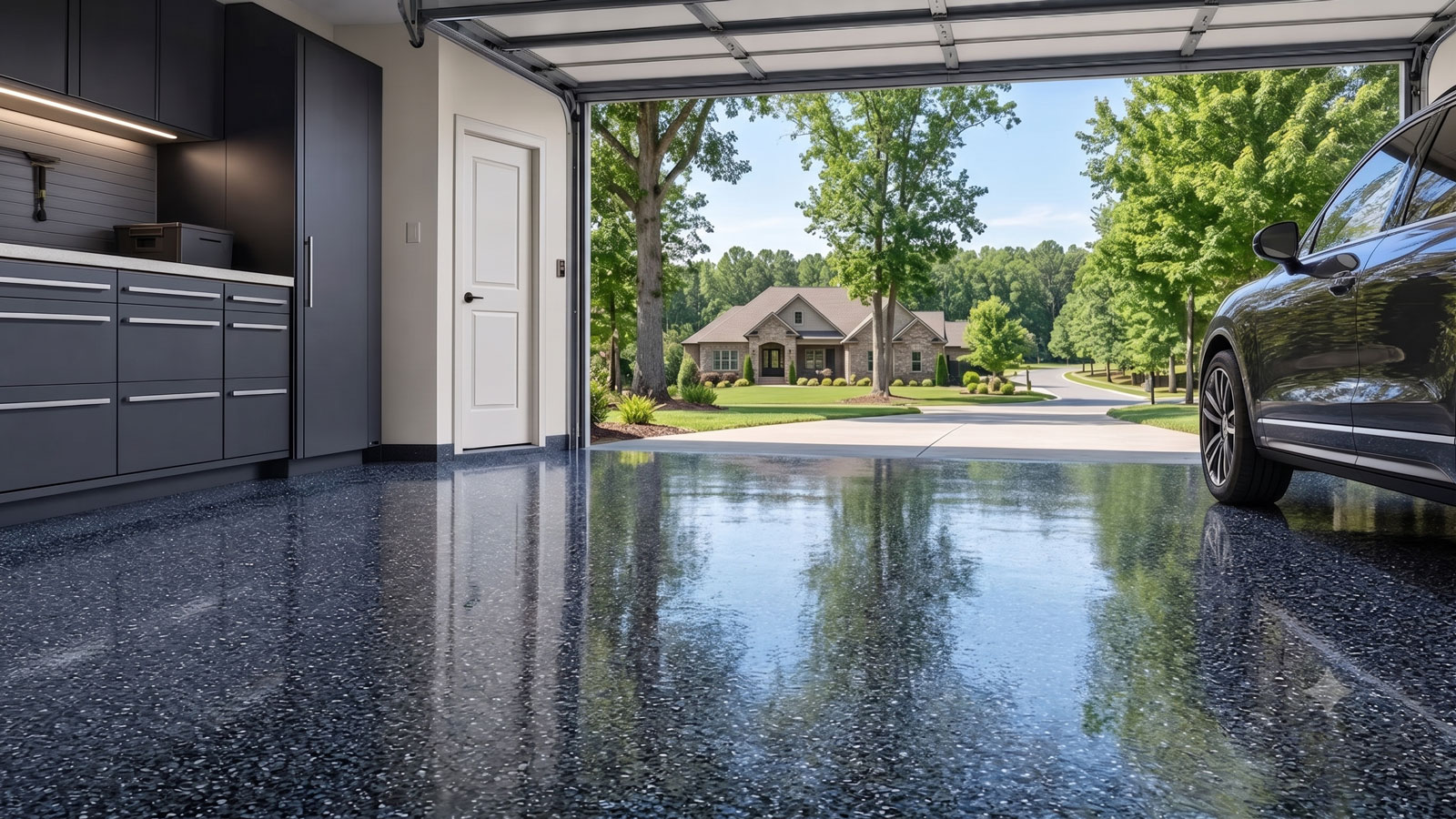
Garage Floor Coating on Wilmington Island, GA
Floor Coating Services in Wilmington Island, GA
Wilmington Island is an unincorporated island community in Chatham County, not a city governed by Savannah. The county adopted an Islands Area Community Plan in June 2001 covering Wilmington, Whitemarsh, Talahi and Oatland Islands. That separate planning history reflects the island communities' established development and environmental setting, but cannot tell a homeowner when the concrete in an individual garage was poured or whether it has internal moisture.
Local drainage evidence is unusually specific. Chatham County's engineering department lists a Wilmington Island Road project replacing a failing outfall pipe with a larger conduit extending toward Ashley Road, and county SPLOST records document Wilmington Park drainage phases including a culvert with tide gates. These facilities manage water at a public scale. They do not diagnose a private garage, but they make observing driveway grades, threshold runoff and downspouts an important part of an estimate.
Garage floors on Wilmington Island may have seen painted surfaces, replacement pours, marine and garden gear or everyday vehicle use. Before choosing epoxy, polyaspartic or flake, check the actual slab for contamination, cracks, sealers and moisture. A sound finished surface may help routine cleanup, but it cannot stop tidal flooding, redirect stormwater or stabilize a damaged foundation.
Local Market Insight
Wilmington Island is included in Chatham County's June 2001 Islands Area Community Plan. County engineering documents Wilmington Island Road drainage improvements and earlier Wilmington Park culvert and tide-gate projects; these are public infrastructure records, not garage-moisture readings.
What Affects the Cost of Garage Floor Coating in Wilmington Island?
An island address alone does not determine a coating price. A garage with previous paint or oil, a repoured slab or persistent wetness can require different preparation from a sound untreated surface of equal size.
Chatham County's documented stormwater projects support asking about actual water entry, but the work estimate must separately identify drainage corrections, concrete grinding, repairs and finish details.
- Previous paint and garage use: A floor used for household storage or outdoor equipment may have worn coatings and localized stains. Inspect actual contamination and include removal of unsuitable films in preparation.
- Garage and slab construction history: Island homes can have additions or replacement concrete. Check the slab's real joints, patches and surface condition rather than inferring its age from the neighborhood.
- Drainage at the threshold: County culverts and tide gates manage community drainage, not an individual garage's entrance. Look for driveway low points, roof-water discharge and actual water lines.
- Moisture compatibility: Unexplained damp areas should be evaluated using methods suitable for the intended system. Coastal proximity alone is not proof of a substrate moisture defect.
- Cracks, edges and access: Pitting, moving joints, steps and storage increase preparation complexity. A contractor should distinguish surface crack treatment from defects that require structural attention.
- Finish texture and scheduling: Wet tires, outdoor equipment and door sunlight influence topcoat texture and cleaning. Choose compatible full layers and product-specific curing conditions before scheduling parking.
Call for a clear, project-specific estimate — or request one online.
Wilmington Island's Separate Planning Identity and Garage Histories
The Savannah Metropolitan Planning Commission prepared an Islands Area Community Plan for Wilmington, Whitemarsh, Talahi and Oatland Islands, adopted by Chatham County commissioners June 8, 2001. The plan addresses the county's island development context instead of treating each neighborhood as a subdivision of Savannah city. These are verifiable local facts, but they do not provide concrete pour dates for homeowners' garages.
A garage may have been added years after its principal house, or its slab may have been repoured following other renovation work. Homeowners should ask about such changes, old paint, oils, damaged corners and previous repairs before a contractor promises a coating. A newer-looking floor can contain sealer, while a long-used floor may still be sound after appropriate preparation.
Mechanical profiling must expose weak material and provide the proper bond surface. The installer should inspect movement at cracks and joints and determine whether moisture and other conditions satisfy the intended product. A decorative resin cannot make structurally unsound concrete dependable.
An informative bid describes old-coating removal, preparation, repairs, layer count, texture, cure time and what is excluded. That approach is more valuable than applying a universal coastal-island price to homes with different garage histories.
Wilmington Park Tide Gates and Water at a Private Garage
Chatham County records detail multiple substantial drainage projects on Wilmington Island. An earlier Wilmington Park Phase 1 effort replaced a 48-inch pipe with a triple 10-by-5-foot box culvert and new tide gates; Phase 2 involved canal widening and culvert improvements. The county also lists a Wilmington Island Road drainage project to replace a failing outfall pipe and extend larger conduit toward Ashley Road. These provide strong, quantitative evidence of drainage management challenges at a public-infrastructure level.
That does not mean a specific resident's garage experiences tidal flooding or wet concrete. The useful on-site questions are where water flows during heavy rain, whether a driveway or side yard channels runoff to the overhead door, and whether unexplained interior dampness persists after dry days. Ordinary tracked-in water from cars is another, more manageable issue.
A resin floor finish cannot operate tide gates, improve county drainage capacity or stop floodwater. Address recurring runoff and potential structural damage before applying coatings, and investigate persistent slab moisture against the selected product's limits.
For sound floors used for parking or storing equipment, discuss actual flake texture, traction, cleaning and curing. A coating may make grime easier to remove, but users still need to clean wet sand, dirt and tracked water. The contractor should match the topcoat to observed use rather than promising protection from every coastal condition.
Frequently Asked Questions
Is Wilmington Island governed by Savannah's city zoning?
Wilmington Island is unincorporated Chatham County and has been included in county island-area planning. Confirm property-specific rules with the appropriate county authorities.
Do the Wilmington Park tide gates mean my garage is flood-prone?
No. Public drainage engineering cannot determine the water or moisture history of one slab. Observe actual site conditions and evaluate the concrete before coating.
Can epoxy prevent water entering during a coastal storm?
No. A decorative floor finish does not floodproof a garage, repair drainage or stop a structurally leaking wall. Address active water entry separately.
Does a replacement slab still need preparation?
Yes. Its age, curing products, sealers, moisture and mechanical profile must be evaluated for the selected system, even if the concrete appears smooth and clean.
What belongs in a Wilmington Island coating estimate?
Ask for old-finish removal, grinding, repair and joint treatment, moisture checks where warranted, complete layers, texture, cleaning instructions and vehicle-return timing.
Wilmington Island Neighborhoods & Local Context
Phone Quote Line
Speak with a floor coating specialist about your project and get a realistic estimate range.
(912) 800-0707Typical Project Cost
$3,000–$5,500
Typical two-car garage range. Final pricing depends on floor size, concrete condition, prep work, coating type, and finish options.
Helpful Guides