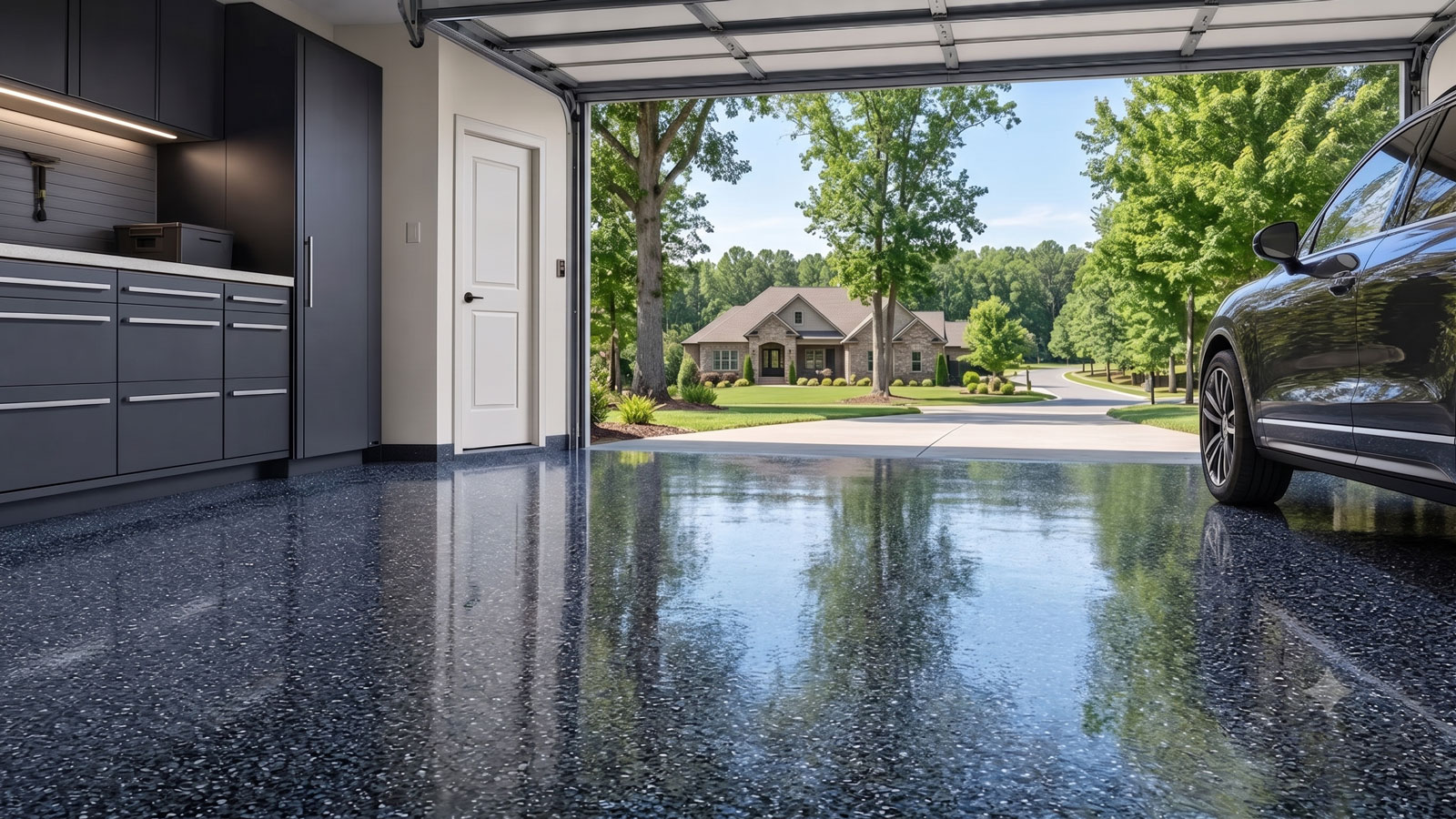
Garage Floor Coating in Bloomingdale, GA
Floor Coating Services in Bloomingdale, GA
Bloomingdale is a separate incorporated Chatham County city on the western side of the Savannah metropolitan area. Georgia's Department of Community Affairs maintains its 2021 comprehensive-plan update and a 2026 plan update, providing a recent picture of the municipality's development priorities. Bloomingdale also maintains a local history museum on East Highway 80, reflecting an established community alongside newer residential changes. That history makes garage age worth asking about but cannot establish the pour date or condition of the concrete.
Bloomingdale's stormwater rules have an especially specific coastal connection. The city adopted the Coastal Stormwater Supplement to the Georgia Stormwater Management Manual in February 2012, and the Metropolitan Planning Commission lists a Bloomingdale Stormwater Management Plan from 2015. These public measures address water quality and runoff across development sites, not whether any individual garage floor is damp or has experienced flooding.
A coating estimate in Bloomingdale should inspect driveway grade, roof-water discharge, surface coatings, cracks and concrete suitability before selecting epoxy, polyaspartic or decorative flakes. A well-bonded finish can make normal tracked-in dirt easier to clean, but it will not fix a driveway that brings rainwater under the door or repair an unstable slab. Explain the preparation and curing, not just the final resin name.
Local Market Insight
Bloomingdale has separate 2021 and 2026 municipal comprehensive plans, adopted the Coastal Stormwater Supplement in February 2012, and has a 2015 local stormwater plan. These sources are evidence of planning and water management, not a test of an individual garage slab.
What Affects the Cost of Garage Floor Coating in Bloomingdale?
Bloomingdale can contain garages added or renovated after their houses, as well as recently placed concrete. Prior paint, curing products, repairs and storage influence the price more than the city's age or a home's ZIP code.
Because stormwater has long been a specific municipal planning concern, ask a contractor to separate visible water-entry issues from the coating work and document exactly how the concrete will be prepared.
- Established garage histories: A longtime household workspace may have patches, paint or oil. Ask about prior use and determine whether incompatible coatings and contaminants need additional removal or grinding.
- New concrete and sealers: Recently developed properties can have curing products or sealers that interfere with adhesion. Confirm surface and moisture suitability rather than assuming a new slab is coating-ready.
- Driveway and gutter runoff: Bloomingdale's adoption of coastal stormwater guidance speaks to public site design, not a specific private threshold. Identify any exterior water route and correct that separately.
- Cracks, joints and patchwork: Inspect actual concrete weakness, movement, pitting and repaired areas. A decorative layer cannot stop structural movement or eliminate poor concrete beneath it.
- Access and equipment clearance: Detached bays, storage, utility areas and narrow approaches may change edge grinding and setup costs. Agree on floor clearance and vehicle staging before scheduling.
- Topcoat and humid-weather curing: Choose flake coverage, texture and topcoat for the household's use. Product-specific surface moisture, temperature and traffic-return rules should control the application schedule.
Call for a clear, project-specific estimate — or request one online.
Bloomingdale's Local Planning and Changing Garage Construction
Georgia's Department of Community Affairs archives Bloomingdale's 2021 comprehensive-plan update and a newer 2026 update, along with earlier plans dating to 2016 and 2008. The city also maintains an official local history museum on East Highway 80. These formal planning and history records distinguish Bloomingdale from nearby Pooler, but none determines whether a private garage was built at the same time as its house.
An older property may have had a replacement concrete floor or a new detached garage. A newer home may still have construction treatments or sealer under the intended finish. Ask when the slab was poured and whether the homeowner knows about previous paint, oil exposure, patches or cracking. Those observations should be recorded before a price is finalized.
Mechanical surface profiling is essential where the coating system requires it. Weak concrete, incompatible previous layers and moisture concerns should be evaluated before resin is applied. Some stable cracks can be repaired during normal preparation, while moving or substantial damage calls for a different assessment.
Compare bids that explicitly include old-film removal, grinding, patching, edges, finish layers and the manufacturer's curing timetable. An apparently cheaper proposal can omit much of that labor, even when both contractors promise the same final color.
Coastal Stormwater Rules and Actual Bloomingdale Garage Moisture
Bloomingdale's public works information states that the city amended its stormwater ordinance in February 2012 to incorporate the Coastal Stormwater Supplement. The supplement addresses site design and water-resource protection in Georgia's coastal communities. The Savannah Metropolitan Planning Commission also lists the Bloomingdale Stormwater Management Plan dated 2015. Those two independent documentary anchors show sustained municipal attention to runoff and water quality.
At a private garage, however, the meaningful evidence is the direction of runoff across the driveway, how downspouts discharge and whether a persistent dark patch remains after dry weather. Normal water carried in by a car or lawn equipment is a different condition from rain crossing the overhead-door threshold or moisture moving through the slab.
If exterior water enters regularly, address drainage and grading before coating. Epoxy or polyaspartic cannot redirect water, repair a leaking building or prevent flooding. A contractor should also determine whether unexplained dampness makes the concrete unsuitable under the proposed product's limits.
For otherwise sound concrete, consider a complete decorative-flake system for easier cleaning and an appropriate traction level. Ask to feel a real sample, clarify maintenance and plan for the full curing period. The local climate may affect scheduling but does not excuse inadequate preparation.
Frequently Asked Questions
Does Bloomingdale's 2012 coastal stormwater rule mean my garage will flood?
No. It concerns municipal development and runoff standards. A particular home's driveway, drainage, flood exposure and slab moisture must be assessed separately.
Will a coating waterproof my Bloomingdale garage?
No. Decorative floor coatings are not structural waterproofing or flood protection. Resolve active water entry and confirm substrate suitability before selecting a finish.
Does a newer Bloomingdale home need grinding?
Often appropriate preparation is still needed. Verify curing products, sealers, concrete moisture and the chosen system's profiling requirements rather than relying on the home's age.
Can a previously painted floor be coated?
Possibly, but the existing material's soundness and compatibility matter. Failing or unsuitable finishes may need mechanical removal before applying the new resin layers.
What should a detailed Bloomingdale estimate cover?
Request slab inspection, removal of old treatments, grinding, repairs, moisture checks where needed, coating layers, texture, edges and return-to-parking restrictions.
Bloomingdale Neighborhoods & Local Context
Phone Quote Line
Speak with a floor coating specialist about your project and get a realistic estimate range.
(912) 800-0707Typical Project Cost
$3,000–$5,500
Typical two-car garage range. Final pricing depends on floor size, concrete condition, prep work, coating type, and finish options.
Helpful Guides