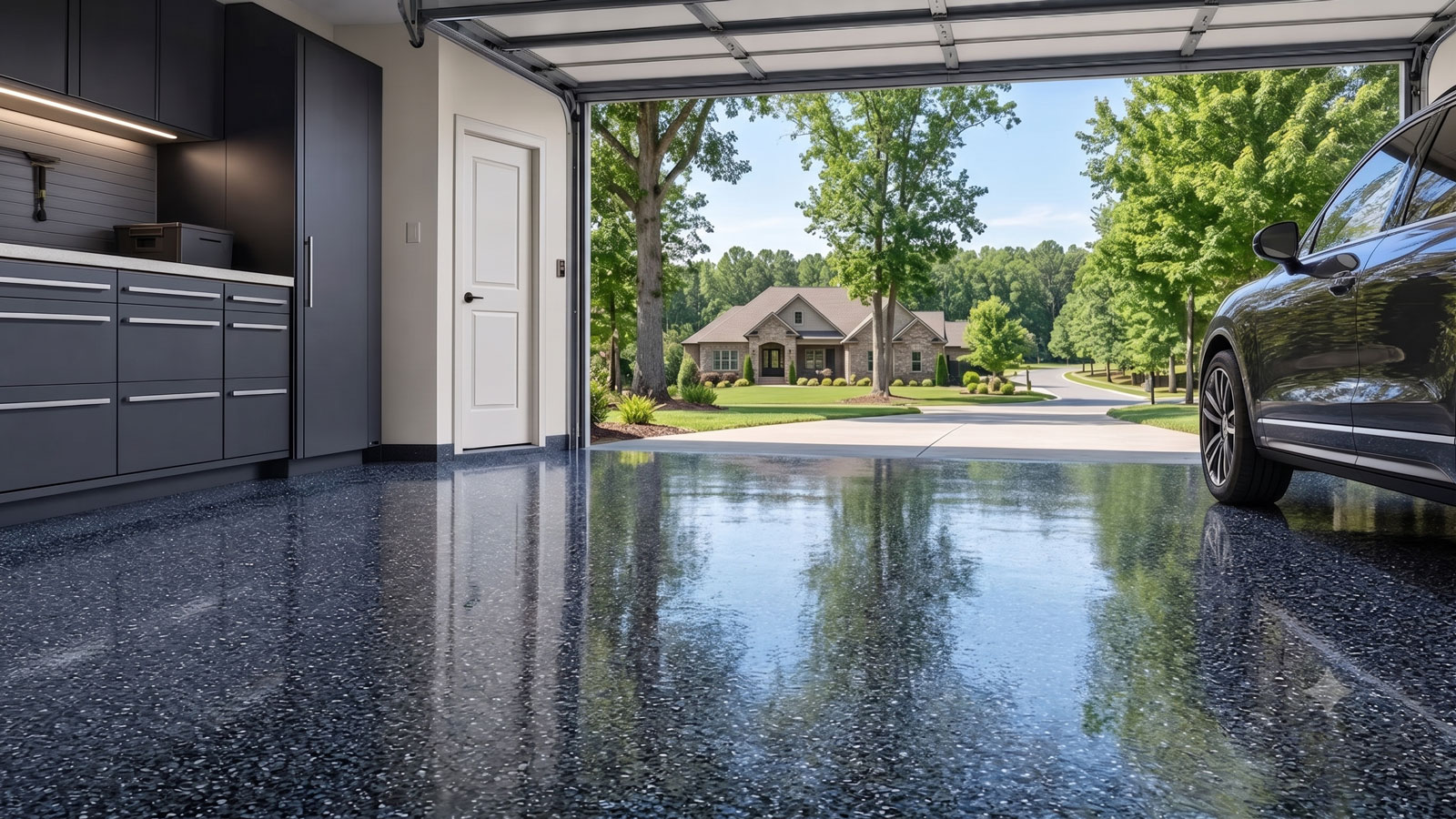
Garage Floor Coating in Garden City, GA
Floor Coating Services in Garden City, GA
Garden City is an incorporated Chatham County municipality with industrial and residential land uses shaped by the Savannah freight and port region. The Georgia Department of Community Affairs archives its 2021 comprehensive-plan update, and city planning staff separately maintain the long-range Growth Roadmap 2026 initiative. Those records describe a changing built environment, not the age of any one home's garage slab. A detached garage could have been added later, or an apparently newer floor might still have sealer or weak patches.
The city has a particularly specific stormwater record. Its public-works department operates an MS4 stormwater management program under Georgia EPD permit GA000208, and the city publishes a Stormwater Master Plan and floodplain guidance. Garden City notes that runoff from roofs, driveways, streets and paved surfaces enters local creeks and marshes. This makes threshold grade worth checking, but does not prove that any private garage has flooded or contains elevated slab moisture.
Before buying epoxy, polyaspartic or decorative flakes, evaluate where water actually comes from, whether old paint or oil is present, how sound the concrete is and how equipment will access the full floor. A continuous finished coating can simplify cleanup on properly prepared concrete, but it cannot replace stormwater drainage repairs or stabilize a moving slab.
Local Market Insight
Garden City publishes a 2021 comprehensive-plan update and Growth Roadmap 2026, while its MS4 program operates under EPD permit GA000208 with a dedicated Stormwater Master Plan. These document development and runoff governance, not private floor-moisture readings.
What Affects the Cost of Garage Floor Coating in Garden City?
Garden City garage costs vary with concrete use and history: an old workroom with coatings and stains may demand extensive surface treatment, while a newer garage might still have a curing or sealing product to remove.
The city's stormwater infrastructure creates a reason to examine actual entrance runoff, not an automatic moisture surcharge. Ask for a written account of concrete repairs, preparation, excluded drainage work and system curing.
- Prior industrial or workshop use: Do not infer contamination from a neighborhood's industrial zoning. Ask about the actual garage's oil, paint or chemical history and include mechanical removal of incompatible layers where observed.
- Slab age versus structure age: A house or accessory garage may have been renovated or repoured later. Inspect the floor's true patches, weak edges and existing films rather than pricing from the year of the building.
- Driveway stormwater direction: Garden City's plan addresses rooftops, driveways and local runoff. Check whether this property's downspouts and apron direct water toward the door before treating it as a coating project.
- Moisture and concrete profile: Persistent unexplained dark patches warrant an appropriate substrate evaluation. Mechanical grinding should create the required surface profile rather than leave sealed or contaminated concrete.
- Garage access and features: Workbenches, drains, steps and side-door transitions affect preparation and edge labor. Confirm how stored materials and vehicles will be moved before coating.
- Finish texture and cure timing: Consider decorative-flake texture, cleaning methods, UV exposure at an open door and manufacturer cure limits. Select a complete system for the intended use rather than an advertised one-day shortcut.
Call for a clear, project-specific estimate — or request one online.
Garden City's Planning and the History Beneath a Garage Floor
The Georgia Department of Community Affairs records a 2021 comprehensive-plan update for Garden City, alongside an earlier 2016 update. The municipality's planning department also describes Growth Roadmap 2026 and work on a metropolitan 2045 plan. These documented planning stages reflect changes in housing, industry and infrastructure in the Savannah-area city. They are not a reliable basis for guessing whether the concrete under a private garage is original.
A contractor should first determine how the space was used. Was it strictly for household parking, or was it previously painted and used for tools or vehicle maintenance? Does a patched section have sound concrete underneath? Has the garage floor been repoured since the home was constructed? These are concrete questions that shape preparation time, removal methods and the estimate.
Even a newer poured surface may contain curing compounds, sealers or moisture that affect bonding. A long-used painted floor may need its coatings removed rather than covered. Look carefully at joints and edges; strong topcoat chemistry cannot make weak, poorly prepared concrete into a dependable substrate.
Compare written bids by checking the scope for grinding, old-finish removal, crack treatment, disposal, layer count, topcoat and realistic return-to-use time. A price that ignores contamination and past coatings may omit the labor that matters most.
MS4 Stormwater, Marsh Outfalls and the Private Threshold
Garden City maintains a municipal separate storm sewer system program under Georgia Environmental Protection Division permit GA000208. The city publishes its Stormwater Management Plan, annual reports and a Stormwater Master Plan, with floodplain guidance explaining that runoff flows from roofs, streets, gravel, driveways and compacted surfaces into local conveyance systems and eventually creeks and marshes. These are unusually detailed public sources for a small city's drainage responsibilities.
They do not reveal how water reaches any particular homeowner's garage. During rain, observe the driveway approach, door threshold and gutter discharge. Is there standing water from exterior flow, or only puddles where wet cars park? Does a dark patch remain after several dry days? These different observations may indicate ordinary maintenance, grading work or a substrate evaluation.
A decorative floor coating cannot improve municipal culvert capacity, stop a flood or reverse a downhill driveway. If recurring exterior water enters, resolve that cause separately. If unexplained moisture exists within concrete, determine suitability against the selected system's product limits before beginning installation.
Once the floor is suitable and sound, discuss traction, flake texture and cleaning. Water from household traffic and yard equipment may still accumulate, but a properly installed continuous finish can make routine cleanup easier. An honest estimate explains both the benefit and the limits of the finish.
Frequently Asked Questions
Does Garden City's stormwater master plan prove my garage needs moisture mitigation?
No. The city documents runoff and drainage infrastructure at a community scale. Actual slab moisture and water entry need an individual inspection and, where warranted, product-appropriate evaluation.
Can I coat an older garage near Garden City's industrial corridors?
Possibly. Inspect the actual concrete for oil, coatings, cracks and surface weakness. Nearby industrial land use does not establish contamination within a private garage.
Will polyaspartic stop water entering from my driveway?
No. Neither polyaspartic nor epoxy can redirect stormwater or cure a threshold grading problem. Address recurring runoff before installing a decorative surface.
Does newly poured concrete always require less work?
No. New concrete may have curing compounds, sealers or unacceptable moisture, and still needs suitable profiling. Preparation must follow the actual slab and product specifications.
What should a Garden City proposal include?
Ask for old-coating removal, grinding, cracks and joints, moisture checks where indicated, finished layers, texture, perimeter work and realistic cure and parking restrictions.
Garden City Neighborhoods & Local Context
Phone Quote Line
Speak with a floor coating specialist about your project and get a realistic estimate range.
(912) 800-0707Typical Project Cost
$3,000–$5,500
Typical two-car garage range. Final pricing depends on floor size, concrete condition, prep work, coating type, and finish options.
Helpful Guides