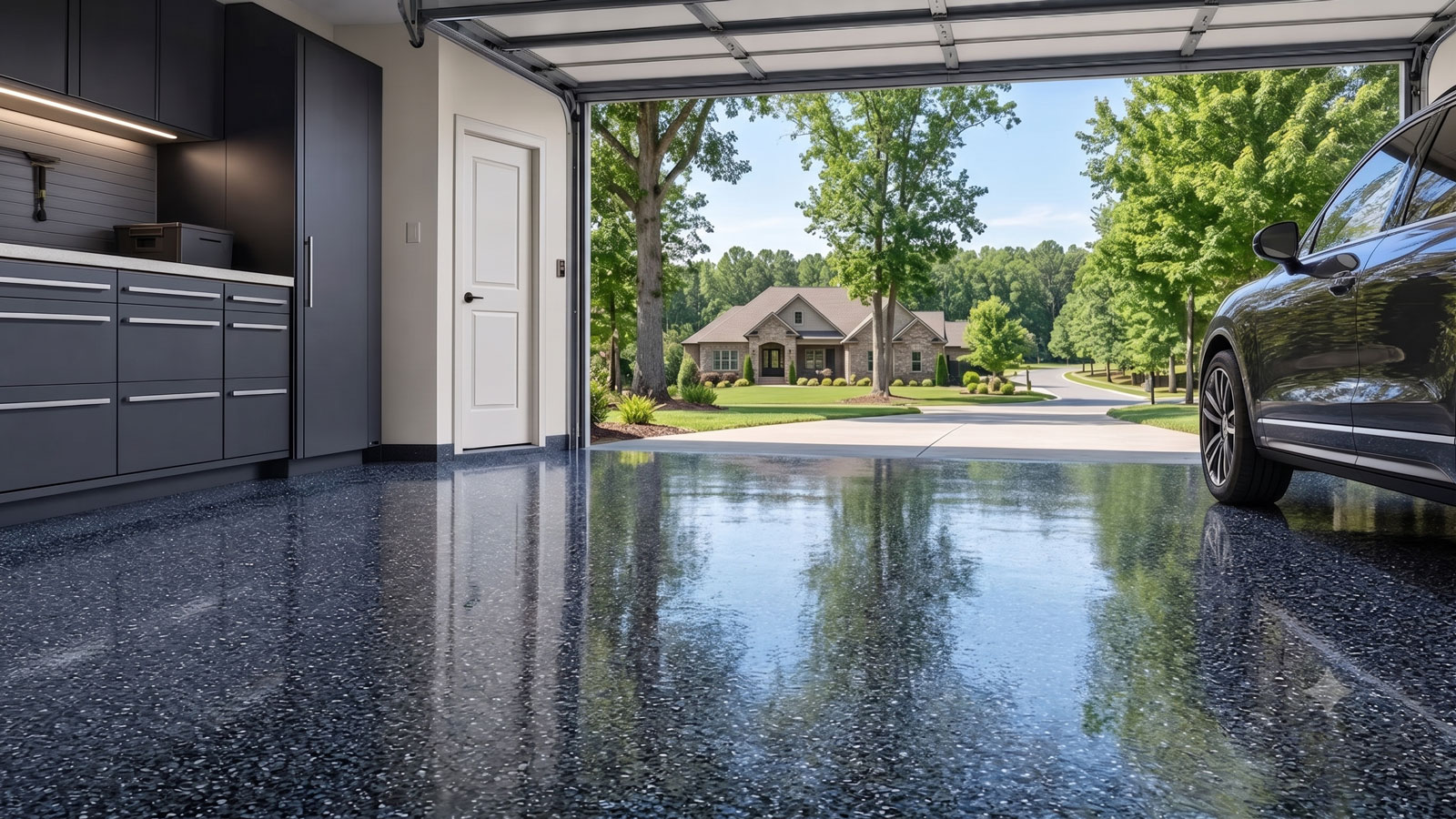
Garage Floor Coating in Savannah, GA
Floor Coating Services in Savannah, GA
Savannah's historic building fabric and low coastal topography give garage-floor projects a different context from newer inland suburbs. The city's official Stormwater Management Plan describes an interconnected system of canals, ditches, pipes, inlets, pumps, wetlands and floodplains, reviewed on a five-year cycle. That public drainage network matters for regional water movement, but does not establish that a particular garage has standing water, a damp slab or structural damage.
Savannah includes established historic neighborhoods, later residential development and garages that may have been added or repoured at different times. A home's age should not be treated as the age of concrete in an attached or detached garage. Before a coating, examine old paint, prior repairs, cracks and surface strength, and identify whether any moisture comes from the slab, exterior runoff or ordinary wet vehicles.
An epoxy, polyaspartic or decorative-flake system on properly prepared concrete can make routine cleaning easier. It cannot waterproof a building against coastal flooding, change a driveway slope or stop concrete movement. A useful estimate describes grinding, old-film removal, repairs, moisture suitability, finish texture and actual curing conditions in humid coastal weather.
Local Market Insight
Savannah's Stormwater Management Plan is updated every five years and documents connected canals, ditches, inlets, pumps, wetlands and floodplains. Historic and later garage construction also coexist, but neither municipal drainage nor house age diagnoses a private slab.
What Affects the Cost of Garage Floor Coating in Savannah?
Savannah garage work varies with past renovations, paint, slab soundness, threshold geometry and access. A small detached historic-area garage and a larger newer bay may need very different grinding and repairs.
Coastal humidity and rain are considerations for scheduling and evaluation, not proof of wet concrete. The quote should identify observed conditions, preparation and the complete finished system.
- Previous paints and finishes: Older garages and repurposed workspaces may contain paint, epoxy or sealers needing mechanical removal. The installer should inspect adhesion rather than assume all coatings are compatible.
- Actual slab history: Historic house age does not establish concrete age. Later garage additions, repours and patch repairs require direct assessment before choosing grinding or crack treatment.
- Coastal threshold water: Savannah's public drainage system is extensive, but private driveway and gutter routes determine local entry. Active runoff or flood concerns require separate solutions.
- Moisture and humidity: High air humidity is not the same as moisture rising through a slab. Investigate persistent dampness using product-appropriate methods before choosing a coating.
- Access and edge work: Detached garages, narrow entrances, storage and drains affect equipment staging. Quote the measured floor and perimeter detailing rather than only a nominal two-car size.
- Finish and cure plan: Decorative-flake texture, sunlight at the doorway and cure restrictions affect cost. Ask how temperature and moisture conditions will be managed during installation.
Call for a clear, project-specific estimate — or request one online.
Savannah's Historic Fabric and the Reality of Garage-Slab Age
Savannah has a long history of urban development, while its wider metropolitan area contains much newer residential neighborhoods. The Chatham-Savannah Plan 2040 framework includes land use, housing, natural resources and community resilience, recognizing different patterns across the region. Those civic documents are useful context, but a historic district label is not evidence that the concrete in a garage is original.
Some garages may have been built after their associated homes or received replacement slabs. Ask about changes to the structure and inspect for old paint, oil marks, patches and deteriorating concrete. An elegant older building can contain sound new concrete; a recently renovated garage can still have incompatible sealer or previous coatings under its surface.
Surface preparation should match the actual substrate. Proper grinding and removal of unsound material precede any selection of flake pattern or resin chemistry. If there is an active structural crack or recurring water intrusion, those conditions need an appropriate assessment rather than concealment with decorative layers.
A detailed Savannah quote should describe the entire sequence: clearing the floor, removal, profile, repairs, moisture suitability, coating layers, texture and curing. This makes comparisons based on real labor and expectations instead of assumptions derived from a home's appearance.
Savannah's Drainage System versus a Private Garage Floor
The City of Savannah's Stormwater Management Plan documents a network of canals, ditches, pipes, catch basins, pumps and open space, including wetlands and floodplains. It reports regular review of the plan on five-year cycles and publishes annual stormwater program information. Those are strong documentary facts about public water management, but they do not establish moisture conditions at a particular residence.
During rain, observe the driveway apron, overhead door and gutters. Does outside runoff enter the room, or are the only puddles from cars and outdoor gear? Do dark patches persist on bare concrete through dry weather? Each pathway has different implications for drainage remediation, cleaning or testing.
A properly installed coating can provide a more cleanable surface on suitable concrete, but it cannot stop a coastal flood, seal a moving wall or correct the driveway's grading. Address persistent water-entry problems before buying decorative flooring, and respect any product moisture limits when evaluating the slab.
Once suitability is confirmed, discuss texture for wet shoes and vehicles, cleaning methods and the time before full service resumes. Humid conditions may affect application windows, so a written cure plan is preferable to general claims of a fast finish.
Frequently Asked Questions
Does Savannah's coastal floodplain mean a garage cannot be coated?
No. Regional floodplain conditions are not a measurement of one slab. The property needs its own inspection for water entry, moisture suitability and surface soundness.
Is concrete in a historic Savannah garage necessarily old?
No. Garages can be added and repoured long after houses are built. Inspect the actual substrate and its previous coatings before deciding on repairs.
Will a resin coating prevent a garage from flooding?
No. A decorative coating is not floodproofing or exterior drainage work. Address active water entry and structural problems independently.
Is polyaspartic automatically better in humid weather?
No. The system should suit the concrete, temperature, moisture limits and use. Proper preparation matters more than selecting a label.
What should a Savannah installer document?
Request grinding, old-finish removal, crack and patch repair, appropriate moisture checks, full layers, edges, texture and return-to-service instructions.
Savannah Neighborhoods & Local Context
Phone Quote Line
Speak with a floor coating specialist about your project and get a realistic estimate range.
(912) 800-0707Typical Project Cost
$3,000–$5,500
Typical two-car garage range. Final pricing depends on floor size, concrete condition, prep work, coating type, and finish options.
Helpful Guides