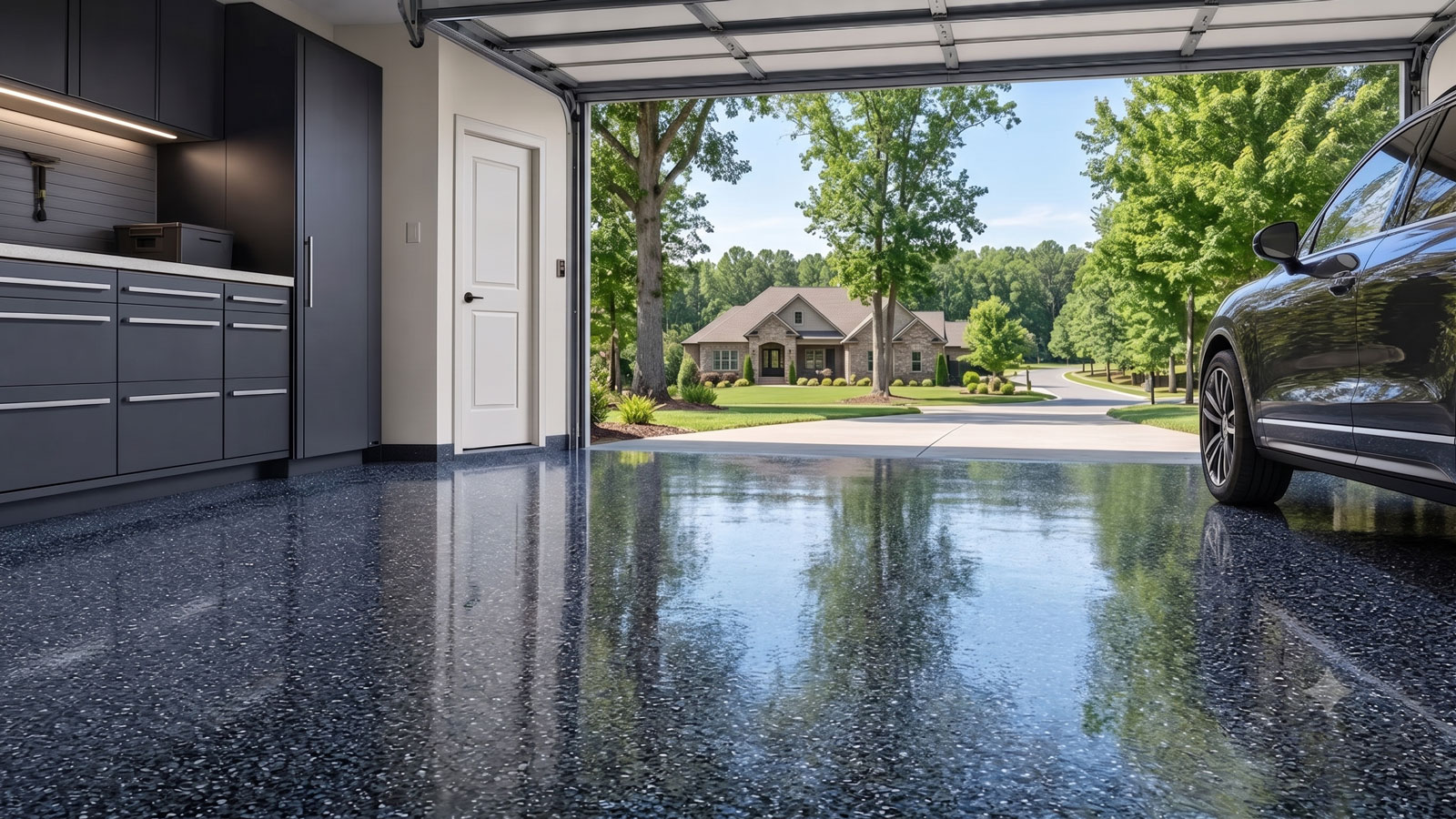
Garage Floor Coating in Pooler, GA
Floor Coating Services in Pooler, GA
Pooler has a documented development history extending from its founding in 1907 to a changing metropolitan suburb near Savannah. The city's Pooler 2040 plan guides housing, transportation and environmental management, and its Pooler 2046 update began with public work in May 2025. The city also prepared a Main Street Master Plan focused on a 1.75-mile U.S. Highway 80 corridor between Chestnut and Reed. These contrasting older and expanding settings make garage construction histories variable, but they do not determine the age of any individual slab.
Pooler's planning recommendations have included stronger floodway and stormwater conveyance rules, review of wetlands buffers and erosion controls. These are local documented development considerations, not proof that a garage is wet. For a coating, inspect the driveway threshold and whether moisture comes from outside runoff, vehicles or concrete itself. A floor finish cannot alter exterior grade or substitute for drainage work.
A Pooler garage may have been newly constructed, renovated or used as storage and workspace. Check for curing compounds, earlier paint, weak patches, cracks and contamination before selecting epoxy, polyaspartic or decorative flake. The quote should cover the necessary grinding and repairs, along with texture and curing requirements suited to the household.
Local Market Insight
Pooler was founded in 1907, has Pooler 2040 and a 2025–26 Pooler 2046 update, and planned a 1.75-mile historic Main Street corridor. Official goals also address floodway impacts and stormwater conveyance, which must be distinguished from private slab moisture.
What Affects the Cost of Garage Floor Coating in Pooler?
Pooler has both earlier residential areas and more recently developed communities. A garage's actual sealer, cracks, paint and use history will determine preparation much more reliably than its age or neighborhood label.
Drainage plans describe citywide systems; a quote should identify observable water entry and distinguish any required exterior correction from grinding, repair and the finish itself.
- Newer concrete readiness: Recent residential development does not mean a fresh slab is coating-ready. Verify curing products, possible sealers, moisture suitability and the required mechanical profile.
- Established Main Street properties: An older garage or later addition near Pooler's long-developed core may have paint, oil or repours. Inspect the actual floor instead of inferring its condition from nearby historic streets.
- Floodway and driveway conditions: The city's stormwater recommendations address development-scale runoff. At a property, inspect driveway slope, gutters and actual water history before claiming a coating will resolve wetness.
- Cracks and patches: Evaluate pitting, repaired joints and crack movement before choosing the material. Structural problems require different remedies from cosmetic surface repairs.
- Vehicle and storage use: Racks, equipment, bikes, steps and storage affect clearance and edge grinding. Price the entire working area and plan where cars and belongings will go.
- Topcoat, flake and scheduling: Finish texture, sun exposure and product curing limits can change costs and maintenance. Choose the complete system based on assessed concrete and return-to-parking needs.
Call for a clear, project-specific estimate — or request one online.
Pooler's 2046 Planning and a Changing Residential Landscape
Pooler's official planning materials document its founding in 1907 and show how land use and housing have developed into a growing Savannah-area municipality. The Pooler 2040 Comprehensive Plan remains a foundation for planning, while a Pooler 2046 update launched in May 2025 and included public meetings and a draft in 2026. The city also has a 1.75-mile Main Street Master Plan for the Highway 80 corridor between Chestnut and Reed.
These facts demonstrate why an established property near the older city and a recent subdivision may have very different garage layouts and construction histories. Yet the age of the home does not prove the slab's age. Ask whether concrete was repoured, painted, sealed or previously repaired, and inspect what is actually present.
For a newer garage, curing compounds and surface moisture may need evaluation before resin application. An older garage may have more visible wear but remain sound after repairs. In either case, correct mechanical preparation is essential, and unsupported assumptions should not determine the coating system.
Homeowners should request explicit details about grinding, removing old finishes, crack repairs, coating layers, edges and curing. A thorough proposal creates a meaningful comparison between contractors rather than relying on a standard square-foot number for every kind of garage.
Pooler Floodway Planning and What a Coating Cannot Fix
Pooler 2040 planning goals included review of wetland buffers, stormwater regulations addressing floodway and conveyance impacts, and erosion control. These are documented local policies connected to the area's growth and water management. They are not moisture test results for any occupied residential garage.
On site, look for water pooling at the door, unusual dark patches, gutter discharge and driveway grades. Water brought in by wet vehicles should be distinguished from exterior water crossing the threshold or suspected moisture within the concrete. The appropriate remedy depends on which pathway is present.
A professionally applied coating on sound concrete can improve cleanup and appearance, but it does not redirect stormwater, fix structural movement or waterproof a building against flooding. If recurring water entry is present, address that cause separately before scheduling the decorative finish.
For day-to-day use, discuss texture for wet shoes and tools, the maintenance behavior of decorative flake and the full cure sequence. Pooler's warm coastal-area weather can affect application planning, but the contractor should base scheduling on the system's instructions and actual conditions.
Frequently Asked Questions
Does recent Pooler construction mean garage floors need no preparation?
No. New slabs can have curing compounds, sealers or moisture limitations. Mechanical profiling and substrate evaluation may still be necessary before coating.
Will a floor coating resolve flooding near a driveway?
No. Drainage and grading require separate solutions. Decorative epoxy or polyaspartic is not residential floodproofing.
Are garages near Pooler's older Main Street necessarily worn out?
No. A garage may be a later addition or have replacement concrete. Inspect the actual floor, not the age of the nearby neighborhood.
How should I choose between epoxy and polyaspartic?
Compare full preparation, moisture limits, layer system, topcoat texture, curing conditions and intended use. Neither product category is automatically right for every property.
What belongs in a Pooler garage quote?
Request surface evaluation, grinding, old-coating removal, crack and patch treatment, moisture testing when appropriate, edges, finish layers and return-to-parking instructions.
Pooler Neighborhoods & Local Context
Phone Quote Line
Speak with a floor coating specialist about your project and get a realistic estimate range.
(912) 800-0707Typical Project Cost
$3,000–$5,500
Typical two-car garage range. Final pricing depends on floor size, concrete condition, prep work, coating type, and finish options.
Helpful Guides